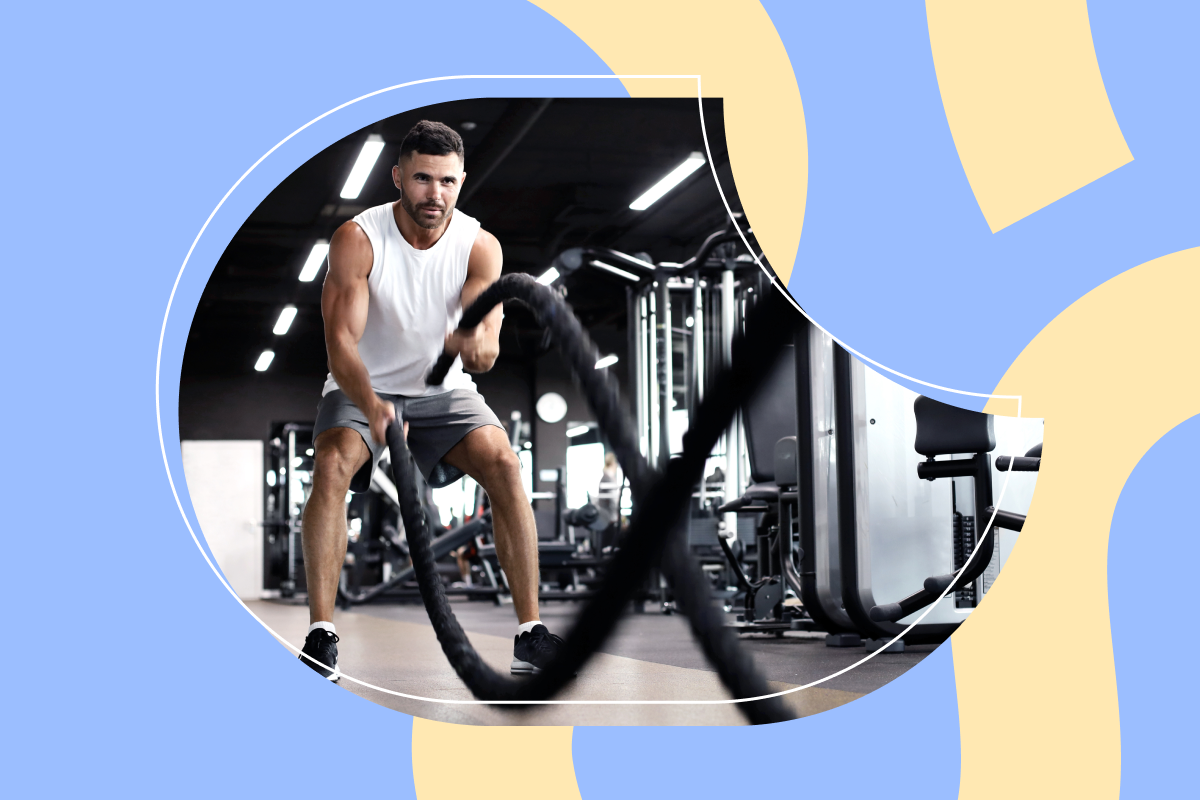

If you are a fitness trainer or studio owner, your content should sell not exercises but results and confidence. People come to the gym for energy, health, and a feeling of "I can"—and that's what needs to be shown in posts and stories.
Below is a ready-made content strategy for fitness trainers and studios with examples, life hacks, and recommendations that can be implemented today.
Why fitness content doesn't work (and how to fix it in 2026)
Most fitness accounts make the same mistakes:
- They post only motivational quotes and photos of "perfect bodies"
- Do not show real clients and their stories
- Write in complex language with professional jargon
- Do not adapt content for different platforms
- Post irregularly
Solution: The content should say: "We are with you, we understand what you're going through, and we're ready to help." Show real people, emotions, and results—and clients will start signing up.
5 content pillars for a fitness trainer
Divide all content into 4-5 recurring directions. This will simplify planning and make the feed predictably useful.
1. Client Stories (Social Proof)
What to post:
- "Before/After" photos with client permission
- Video interviews: "How my life changed in 3 months of regular workouts"
- Client quotes with photos: "I now like my reflection in the mirror"
- Progress stories: weekly client reports
Title example: "How Marina stopped being embarrassed by her figure and lost 12 kg without strict diets"
Life hack: Record short video reviews right after a workout when the client is on an emotional high.
2. Educational Content (Expertise)
What to post:
- Form tutorials: "Most do this exercise incorrectly. Here's how to fix it"
- Myth busting: "Cardio is not the best way to burn fat. Here's why"
- Guides: "5 habits that hinder weight loss"
- Breakdowns: "Why your weight is stagnant even when you train"
Life hack: Take one popular exercise (squat, plank, press) and show 3 levels of difficulty: for beginners, intermediate, and advanced.
3. Studio Behind-the-Scenes (Behind-the-Scenes)
What to post:
- A day in the life of a trainer: from the early morning to the last client
- How we prepare for workouts: setting up equipment, checking cleanliness
- Team moments: trainers debrief at the end of the day
- New equipment: unboxing and first test
Example: "Backstage: how we prepare the hall for the evening group"
Life hack: Show not only the perfect picture but also moments like a forgotten dumbbell, jokes between sets. It builds trust.
4. Motivation without Toxicity
What to post:
- "You don't have to be perfect. The main thing is to keep going"
- Failure stories: "How I quit sports and what I realized six months later"
- Client quotes: "Why I came to the gym"
- Mental health: how sports help cope with stress
Important: Avoid toxic motivation like "No pain, no gain". Instead: "You've already done great by coming today."
5. Practical Benefit (Actionable Content)
What to post:
- 15-minute mini-workouts: "For those who work at a computer"
- Recipes: "Healthy breakfast in 5 minutes"
- Life hacks: "How to recover after an intense workout"
- Guides: "What to eat before and after an evening workout"
Reels Example: "3 exercises to relieve back pain after a workday"
Life hack: Create content that can be saved and used later. Such posts get more saves.
Platform features: where and what to post
Best formats for Instagram*:
- Reels: 15-60 seconds, tutorials, quick workouts, myth-busting
- Stories: daily studio life, polls, Q&A, schedule
- Carousels: guides, advice series, exercise breakdowns
- Posts: client stories, motivation, event announcements
Frequency: 4-6 times a week, stories daily.
What works on Telegram:
- Short video tutorials (up to 1 minute)
- Text guides with checklists
- Voice messages from the trainer with daily tips
- Announcements of new programs and schedules
Life hack: Create a separate channel with free workouts—this is a great lead magnet.
VK features:
- Long reads work better than on Instagram*
- Polls and discussions are well-received
- You can create albums with client photos
Example: Post-analysis "Why diets don't work without movement" with detailed explanation and examples.
What to post on Zen:
- Guides: "How to start training if you've never worked out"
- Client stories in long read format
- Selections: "10 mistakes beginners make in the gym"
Important: Zen loves unique, detailed content. Adapt posts from Instagram* into full-fledged articles.
20 ready-made post ideas for 2026
- "Myth Buster"—a short video debunking a popular misconception (e.g., "To lose weight, you have to run every day")
- Q&A with the trainer—live stream answering questions about workouts and nutrition
- "Why I Joined"—a client's quote about starting their journey
- Beginner's Guide—carousel "Perfect plank form in 5 steps"
- "What to Wear for..."—a guide on workout gear for a specific type of training (yoga, crossfit)
- Recipe Swap—video "Replace flour with oats: healthy pancake in 5 minutes"
- Gym Etiquette—a fun post "5 rules to not be that guy in the gym"
- Backstage: cleaning—a short video on how the team sanitizes equipment (builds trust)
- Motivational Monday—a quote about mental health and sports
- "Where I Started vs Where I Am Now"—personal fitness journey of the trainer
- Monthly Client Spotlight—interview with a participant about their goals and progress
- "Do This Instead... "—showing a popular exercise and a better alternative
- 30-day Challenge—a new exercise every day for a month
- Partner Workout—video with a client or another trainer
- Studio Tour—45-second video tour of the gym, especially if there's new equipment
- WOD of the Day—graphic post with the workout of the day
- Story of Giving Up on Workouts—"My client initially gave up and then returned with new motivation and achieved the desired result"
- Checklist—"5 habits that hinder weight loss"
- Beginner Mistakes—top 5 gym mistakes with breakdowns on how to fix them
- "How I Relax"—a personal post from the trainer about recovering after workouts
Life hacks for maximum engagement
Visuals:
- Show real people, not models. Pictures with emotions work better than staged shots.
- Film on a phone without editing. Sincerity is more important than a perfect picture.
- Use trending music in Reels, but not at the expense of content quality.
Texts:
- Write simply. Avoid professional jargon. Instead of "myofibrillar hypertrophy"—"muscle growth by increasing fibers."
- Don't overload the text. 3-5 short paragraphs are better than a long read.
- Add calls to action. "Save so you don't lose it," "Send to a friend who also wants to start," "Sign up for a trial workout in direct".
Engagement:
- Ask questions at the end of the post. "What is your biggest challenge with workouts?"
- Use polls in stories. "Which abs are we training tomorrow: upper or lower?", "Heavy or light workout?"
- Ask for reactions. "Like it if it was helpful"
Regularity:
- Post 3-5 times a week. Consistency is more important than perfect content.
- Reply to comments and messages within 24 hours (or set up automated replies in Postmypost). This directly affects conversion into bookings.
How to adapt the same material for different platforms
The same idea can work in 5+ formats. Here's how to do it:
Original material: Video tutorial "How to Properly Squat"
- Instagram* Reels: 30-second version with quick cuts and text on screen
- Instagram* Carousel: 5 slides with step-by-step photos and description of errors
- Telegram: Video + text guide with checklist "5 points of correct technique"
- VK: Longread with detailed analysis of squat biomechanics
- Zen: Article "Why 90% of people squat incorrectly and how to fix it"
- Stories: Poll "Do you look after your knee position when squatting?" + link to the full tutorial
If you manage multiple platforms simultaneously (and for a fitness trainer, this is a necessity), Postmypost comes to the rescue.
1. Cross-posting to multiple networks simultaneously
Example: Filmed a squat tutorial → uploaded to Postmypost → selected all necessary platforms → clicked "Publish". Done.
2. Scheduled posting and content calendar
For fitness studios: Schedule your WOD for the week, client stories for the month, motivational posts for every Monday—and forget about the daily headache "what to post today".
3. Content coordination in the team
If you have multiple trainers or an SMM manager, Postmypost allows you to coordinate posts before publishing. One prepares, the second checks, the third publishes.
4. Analytics and optimization
Track which posts work better and adjust the strategy. For fitness content, this is especially important—you'll quickly understand what resonates with the audience: tutorials, client stories, or motivation.
5. Time-saving
Instead of spending 2-3 hours a day on manual posting, you plan content once a week and focus on what's really important: training and clients.
Ready content plan for a week for a fitness trainer
| Day | Platform | Content Type | Example |
| Monday | Instagram\* + Telegram | Motivation | "You don't have to be perfect. The main thing is to keep going" + client story |
| Tuesday | Instagram\* Reels + VK | Education | Reels "3 plank mistakes and how to fix them" |
| Wednesday | Stories + Telegram | Behind-the-Scenes | "A day in the life of a trainer: from 7 am to the last client" |
| Thursday | Instagram\* Carousel + Zen | Practice | Carousel "5 exercises to relieve back pain" + article on Zen |
| Friday | All Platforms | Social Proof | "Before/After" photo of a client with their story |
| Saturday | Stories + Telegram | Engagement | Poll "Which workout do you want next week?" |
| Sunday | Instagram\* + VK | Rest/Lifestyle | "How I recover after a week of workouts" |
- Content aligns with one of the 5 pillars (clients, education, behind-the-scenes, motivation, practice)
- Text is written in simple language, without jargon
- There's a call to action (save, send, sign up)
- Visuals show real people, not stock photos
- Content is adapted to the platform (Reels ≠ longread)
- There is permission to use client photos/videos
- Post is scheduled in Postmypost for cross-posting
What else is useful to consider
- To ensure content is published regularly, not just on days when inspiration strikes, create a plan for the month. The Postmypost guide on creating a content plan explains how to highlight sections, come up with topics, and distribute publications across platforms.
- Evaluate not just likes. For a fitness account, it's more important to understand which publications lead to transitions, messages, and sign-ups for trial workouts. The checklist on key SMM metrics will help with this.
- If you develop Telegram and Zen in parallel, set up material publication through a bot: the Postmypost instruction shows the connection process step by step.
Final tip
Fitness content works when it's sincere, useful, and regular. Don't chase the perfect picture—show real people with real results. Write simply, publish consistently, and clients will start signing up on their own.
Use Postmypost—plan, adapt, and publish content in a few clicks. This will free up time for what you do best: training and inspiring.
*Instagram belongs to Meta, recognized as an extremist organization and banned in the Russian Federation.