In 2025-2026, star status will no longer guarantee sales. However, micro-influencers – bloggers with an audience ranging from 1-5 to 50-100 thousand followers – consistently show better results in conversions and trust. They communicate with people in a relatable manner, without pretentiousness and staged shoots. For small and medium businesses, this is a goldmine: affordable, native, and effective.
Why working with micro-influencers is an investment, not an expense
Micro-bloggers generate 5-7 times more engagement for every ruble spent compared to large influencers. Here are the main advantages for your business.
-
Audience trust – followers perceive recommendations as advice from a friend rather than as advertising. Surveys indicate that 50-60% of people trust bloggers more than traditional advertising.
-
Precise target audience – niche micro-influencers attract those who are already interested in your topic (moms, fitness, travel, etc.).
-
High conversion – reviews and unboxings lead to real orders. Often, one post from a micro-influencer generates more sales than targeted ads for the same amount.
-
Low risk – barter or reasonable compensation for integration allows testing different strategies without significant investments.
The result: increased sales, organic traffic in messengers and social media, loyal customers who return.
The main headache for businesses: how to avoid "empty" bloggers
You spend time and money, and in the end – a dead audience, low views, and zero inquiries. Sound familiar? The most common problems include:
-
The blogger's followers are actually bots or inactive accounts;
-
Low engagement – posts receive 10-20 likes with 30 thousand followers;
-
The audience does not overlap with your target audience (for example, a Moscow blogger promoting products for the regions).
Particular attention should be paid to bloggers with "star syndrome" – inflated prices, whims, and missed deadlines.
Bloggers with "star syndrome": how to recognize them and why it's better to avoid them
"Star syndrome" is not just about whims; it's a whole behavior model that almost always leads to problems in collaborations. Such bloggers usually have moved beyond the "micro" stage and see themselves as media personalities, even if they only have 40-80 thousand followers. How does star syndrome manifest in influencers:
-
Inflated price list – asking for 50-150 thousand rubles for a story or post with an engagement rate (ER) of 2-4% and reach of 5-10 thousand views;
-
Changing terms during the process – “I changed my mind, now I want +30 thousand,” “only with 100% prepayment,” “let’s say I keep the product for myself”;
-
Missed deadlines – a post goes live two weeks later instead of the promised three days, or doesn’t go live at all without explanation;
-
Demands regarding the script – “this is not my style,” “rewrite the text,” “you film it yourself, I won’t come up with anything”;
-
Disregard for feedback – ignoring questions about statistics, not sending reports, getting upset at requests to show reach;
-
Public whims – may post stories with hints like “these brands think I work for pennies again.”
But such bloggers can be identified even at the communication stage.
-
They immediately quote a very high price without discussing the format and without reviewing your product.
-
They refuse to show statistics for stories/posts from recent collaborations.
-
They write in a style like “I’ll think about it,” “if I like the product,” “only if you pay now.”
-
Their profile has many posts complaining about other brands, “inadequate” clients, or “cheap collaborations.”
 AI-ассистент отвечает в комментариях и сообщениях так, будто это живой менеджерБыстро, естественно, без пропусковУзнать подробнее
 -
Few or no native advertising integrations – only glossy staged shoots.
Collaborating with a "star" blogger is unlikely to benefit your business.
-
Money is spent, but sales are nearly non-existent (low ER + non-targeted traffic).
-
Nerves and wasted time: endless revisions, delays, and correspondence.
-
Reputational risks: if the blogger misses deadlines or posts something negative – your brand suffers.
-
Financial losses: prepayment is often not returned, and the result is zero.
If you sense even the slightest hint of “I am the main one here” – say goodbye immediately. It’s better to spend the same money on 3-5 micro-influencers with an ER of 8-15% than on one "star" with a complicated personality and dead statistics.
Micro-influencers without pretensions deliver results. “Stars” often only bring headaches. The solution is to work only with verified metrics and platforms where everything is transparent.
How to choose micro-influencers: key criteria and where to find them
The main indicator is ER (engagement rate). ER > 7-8% for Instagram and > 30-40% ERR (by reach) for Telegram – this is already a good level for micro. Below 3-4% on Instagram or <20-25% views on Telegram is almost always a sign of a "dead" audience.
How to calculate ER:
ER = (Likes + Comments + Saves + Shares) / Number of followers × 100%
For Telegram, ERR by reach is often looked at:
ERR = (Reactions + Forwardings) / Views × 100%
A good indicator is 30-60% depending on the niche.
There are also other important selection criteria.
-
Audience of 5-50 thousand – an optimal balance of price and quality.
-
Values and style align with your brand (this increases trust 2-3 times).
-
Quality audience: at least 60-70% real people from your region/niche (check via analytics services).
-
Activity in stories/Reels/posts – not just numbers, but real comments.
-
Reviews of previous collaborations (ask for screenshots or case studies).
Where to find micro-influencers in 2026? Here are some current platforms.
-
WOWBlogger – one of the largest Russian exchanges (database >38 thousand bloggers), convenient filters by ER, niche, price + automatic labeling of advertising.
-
Perfluence, Trendhero, GetBlogger, EPICSTARS – great analytics, checks for artificial inflation, convenient search by micro.
-
LabelUp, LableUp – strong focus on ER and audience quality, comparison with similar accounts.
-
Manual search: by hashtags on Instagram/VK/Telegram + look for recommendations in niche chats and communities.
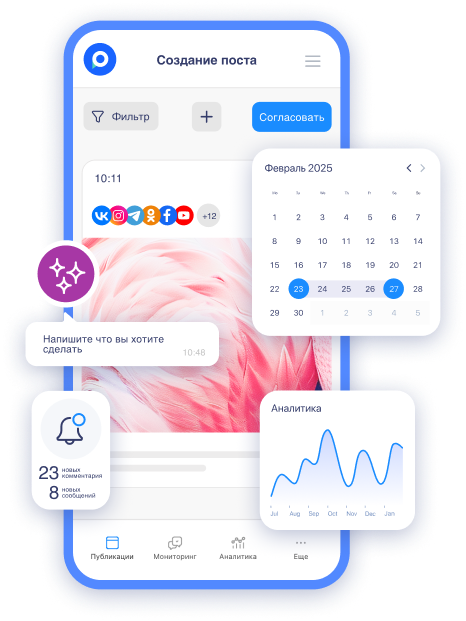
And if you want not just to find a blogger, but also to immediately understand whether they brought real results after the first collaborations, check out Postmypost. After integration with the blogger, you can:
-
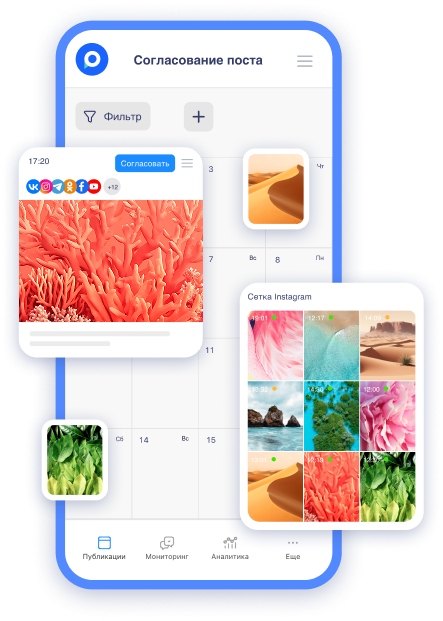
plan your posts and stories in a single calendar to enhance the effect of advertising with the influencer (for example, launching supporting content on your accounts simultaneously);
-
track total reach, views, likes, comments, and saves across all channels in a single dashboard, including organic growth after the blogger's post;
-
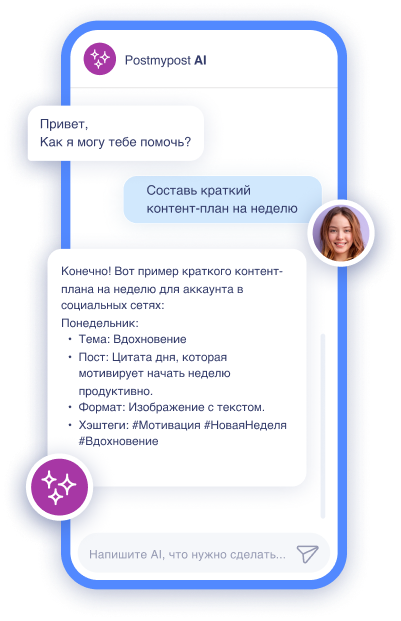
collect all comments and messages from the audience (from Instagram, VK, Telegram, and others) in a single window – convenient for responding and recording leads that came specifically through the influencer;
-
analyze post statistics – see how the collaboration affected the ER of your accounts, subscriber growth, and engagement.
Many entrepreneurs note that after their first test integrations with micro-bloggers and analyzing results in Postmypost, they stop wasting time on "empty" collaborations. In Postmypost, real conversion is visible: who brought traffic to chats/messengers, how many inquiries came in, and where it’s worth continuing collaboration. This turns chaotic tests into systematic work – without unnecessary correspondence, with transparent statistics, and sales growth of 2-3 times.
Life hacks: how to increase the efficiency of collaboration
-
Conduct 5-10 tests simultaneously with different micros – this way, you’ll quickly understand which format and style resonate.
-
Ask for native content: not “buy from us,” but “I tried it and here’s what happened” – conversion is higher by 40-60%.
-
Use UTM tags and promo codes – it’s immediately clear who brought sales.
-
Agree on stories + post + pinned content + chat/newsletter – this significantly increases reach.
-
Barter for starters – many micros are willing to exchange products, especially if the product is cool.
Conclusions
Micro-influencers without star syndrome are not a trendy gimmick but a genuinely effective tool for sales growth in 2026. They provide trust, targeted traffic, and high conversion with minimal risks and investments. The main rule: choose not by the beauty of the profile or the loudness of the name, but strictly by numbers – ER, audience quality, genuine engagement, and real feedback on past integrations.
Avoid "stars" with inflated expectations – they more often bring headaches, missed deadlines, and empty wallets. Instead, test 5-10 micro-bloggers simultaneously, use native formats, UTM, and promo codes – and you’ll quickly see who truly works for your business.
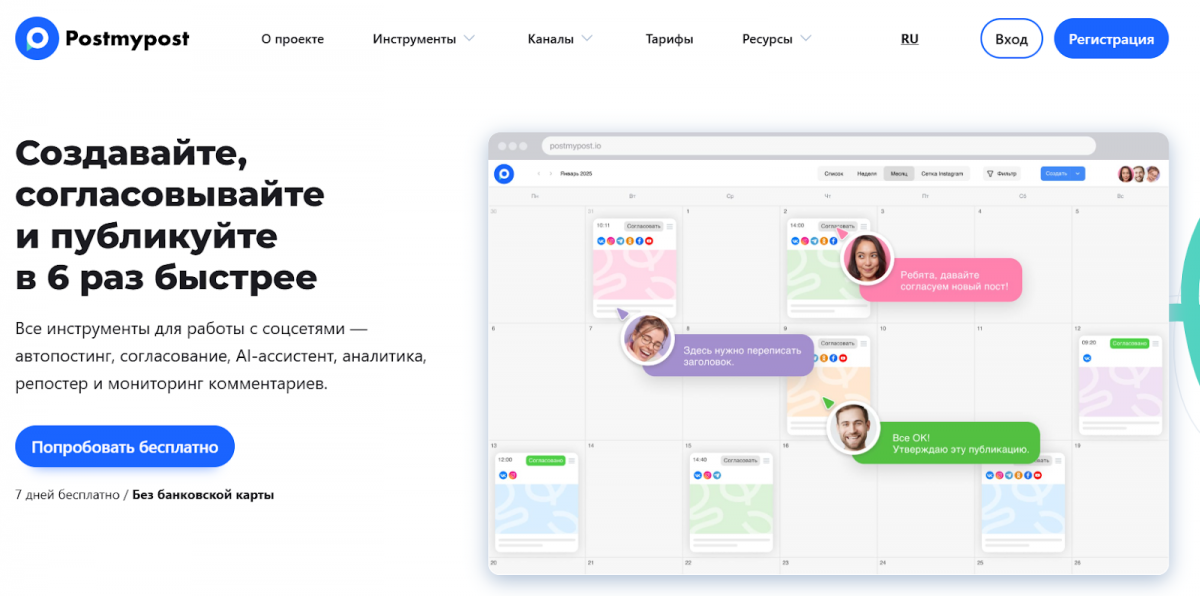
And to avoid manual analysis and wondering “did this blogger bring anything at all?”, connect Postmypost. The service transforms one-off tests into a system:
-
plan supporting posts in your calendar;
-
gather all comments and leads in one window;
-
view a complete dashboard with reach, ER, growth, and traffic after collaborations.
In the end, you’ll have a clear picture: who brought sales and who can be safely filtered out. Transition from chaotic experiments to systematic promotion through micro-influencers. Results won’t keep you waiting: growth in inquiries, loyal customers, and steadily increasing sales.