In 2026, creating content without tying it to real events is like driving a car with your eyes closed: you might reach your destination, but there's a huge risk of missing all the turns and opportunities. An event calendar helps transform ordinary posts into relevant content that receives more reach, engagement, and conversions. When the entire year is planned in advance, stress dissipates, while creativity flourishes.
In this article, we will explore why an event calendar is essential, which categories of dates should be included, and provide a selection of the most powerful news hooks for 2026.
Why Content Plans Suffer Without an Event Calendar
Imagine opening your planner and seeing blank spaces for half a month ahead. There are no ideas, inspiration is at zero, while competitors are busy gathering engagement on relevant topics. Sound familiar? An event calendar solves this problem once and for all. It turns random posts into relevant content that algorithms favor, and audiences actively like, comment, and save.
-
Holidays and commemorative dates provide free traffic from algorithms (people actively search for thematic content).
-
Seasonality allows you to prepare promotions, guides, stories, and carousels in advance.
-
Niche events help you stand out among competitors who only post for International Women's Day and New Year's.
-
Regular news hooks save you during "empty" weeks when there are no ideas.
Ultimately, an event calendar is not just a list of dates but a real lever for increasing reach, engagement, and sales. When you know in advance what will be relevant, content stops being random—it becomes well thought out.
How to Effectively Work with News Hooks in 2026: Timelines, Approaches, and Examples
A news hook is not just a date on the calendar but an opportunity to "jump in" at a relevant moment when people are already searching for related topics. However, to avoid making your post look like "just another template greeting," you need to approach it systematically.
How Much Time Do You Need to Prepare?
-
Major holidays and seasonal peaks (New Year, March 8, Black Friday, Knowledge Day) – 2–4 weeks in advance. Why so early? You need time for creativity, shooting/design, approvals, and preparing promotions. Plus, algorithms favor when teasers appear early, which boosts reach.
-
Medium events (e.g., Halloween) – 7–14 days in advance. This is enough time for a carousel, reel, or stories with ideas/collections.
-
Quick/situational news hooks (memes, news, trends, viral events) – 1–3 hours in advance (ideally within the first 30–60 minutes). Speed matters: a post published two days after the peak discussion will not be seen by anyone.
-
Year-round plan – 1–2 months before the start of the year (January-February) to create the main calendar, and then adjust monthly based on fresh events.
What Type of Content Works Best?
Mix it up: 60–70% useful/entertaining + 30–40% selling/promotion. People come for emotions and value, not for advertising.
-
Announcement/teaser (3–7 days in advance) creates anticipation.
-
Main post on the day of the event – peak engagement.
-
Follow-up post (the next day) – UGC, results, feedback, "what was your experience?".
-
Formats ranked by effectiveness in 2026: reels/short videos > carousels > stories with polls > static posts > text.
Examples of Approaches and Content (Real Scenarios for Bloggers/Brands)
-
March 8 (global peak).
-
2 weeks in advance: teaser stories "Getting gifts ready? Vote: flowers or experiences?"
-
On the day: reel "5 gift ideas that definitely won't gather dust" + soft promotion of your product.
-
The next day: carousel with UGC "Thank you for your photos with gifts." Result: reach ×3–5, increase in saves and reposts.
-
Halloween (creative occasion).
-
10 days in advance: collection "Top 10 scary stories from bloggers' lives" (with memes).
-
On the day: video challenge "Transform into a monster in 30 seconds" featuring your product (e.g., makeup for costumes). Comparison: simply "Happy Halloween!" – 100–200 likes; humorous challenge – 5–20 thousand views + reposts.
-
Quick situational (e.g., viral meme or news).
-
Reaction within the first hours: reel overlaying your face/product onto the meme. Example: if a meme about "Monday after the holidays" goes viral – post "How we all look today" + humor + a call to "Share your photo in the comments."
Key Recommendations for 2026
-
Don't overdo the sales – people are tired of "March 8 discount 88%." Make value your priority.
-
Adapt to the platform: VK and Zen prefer longreads/carousels, Telegram – text + emojis, short videos are trending everywhere.
 AI-ассистент отвечает в комментариях и сообщениях так, будто это живой менеджерБыстро, естественно, без пропусковУзнать подробнее
 -
Watch your tone: sincerity and humor beat "corporate speak."
-
Analyze: after each news hook, look at what worked (reach, engagement, conversions), and adjust for the next year.
Main Categories of Events for the 2026 Content Plan
-
National holidays – maximum reach, emotional response.
-
International holidays – work for any audience.
-
Professional days – perfect for expert content and B2B.
-
Seasonal and marketing peaks – March 8, Black Friday, etc.
-
Niche/meme dates – for creativity and virality.
-
Major global events – Oscars, championships, crypto/tech events.
Key News Hooks for 2026 by Month (Top for Content)
January:
-
January 1–8 – New Year holidays → summarizing 2025, plans for 2026, motivation;
-
January 14 – Old New Year → nostalgic content, traditions;
-
January 25 – Student Day → content for a young audience, discounts on courses.
February:
-
February 2 – Groundhog Day → forecasts, humor about weather/life;
-
February 14 – Valentine's Day → love, relationships, gifts;
-
February 9 – Dentist Day → dental care, myths about dentistry, promotions on services/products (if health/cosmetics).
March:
-
March 8 – International Women’s Day → one of the strongest commercial hooks of the year;
-
March 21 – World Poetry Day / Spring Equinox → creative content.
April:
-
April 1 – April Fool's Day → memes, jokes, light content;
-
April 12 – Cosmonautics Day → popular science posts, inspiration.
May:
-
May 1 – Spring and Labor Day (May Day) → demonstrations/picnics, motivation for work/rest, spring promotions, collections "how to start May productively";
-
May 3 – World Press Freedom Day → content about freedom of speech, journalism, personal branding in media, if the niche is SMM/content/blogging.
June:
-
June 1 – World Milk Day → recipes with dairy products, product collections, humor about "childhood in a glass," promotions on dairy/ice cream;
-
June 3 – World Bicycle Day → guides for bike rides, summer sports, accessory collections, calls for active leisure.
July-August:
-
Vacation season → guides "what to take with you," summer collections.
-
August 8 – 08.08 (symmetric date) → posts about "ideal day" often go viral.
September:
-
September 1 – Knowledge Day → courses, self-development;
-
Late September – start of the autumn season → coziness, blankets, pumpkins.
October:
-
October 31 – Halloween → the most creative occasion of autumn (costumes, decor, horror).
November:
-
November 4 – Day of National Unity;
-
November (whole month) – World Male Health Month → mustaches, men's health, motivation for check-ups, humor + serious posts (ideal for wellness, fitness, men's content niches).
December:
-
December 1–20 – pre-New Year hustle → gifts, ideas, sales;
-
December 31 – New Year 2027 → year-end summaries, greetings.
Postmypost – Your Personal Assistant in Planning Content for 2026
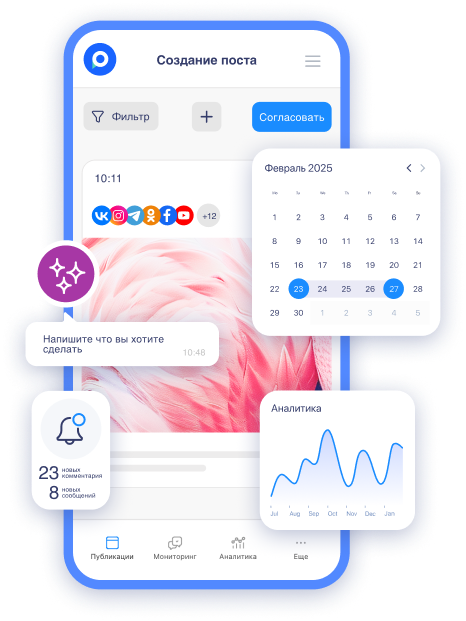
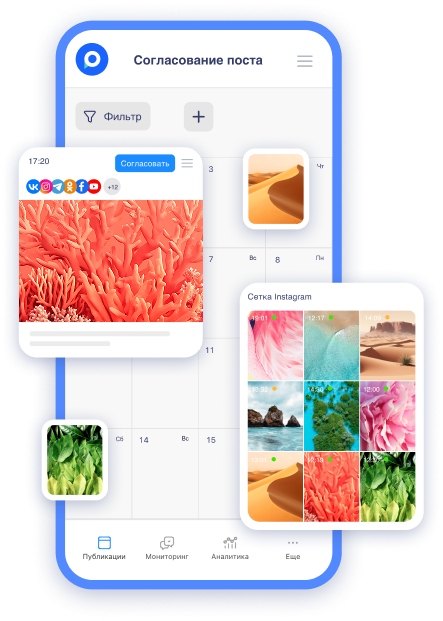
Manually tracking hundreds of dates is a nightmare. That's why many bloggers and SMM specialists have long switched to convenient services where the event calendar is built directly into the planner.
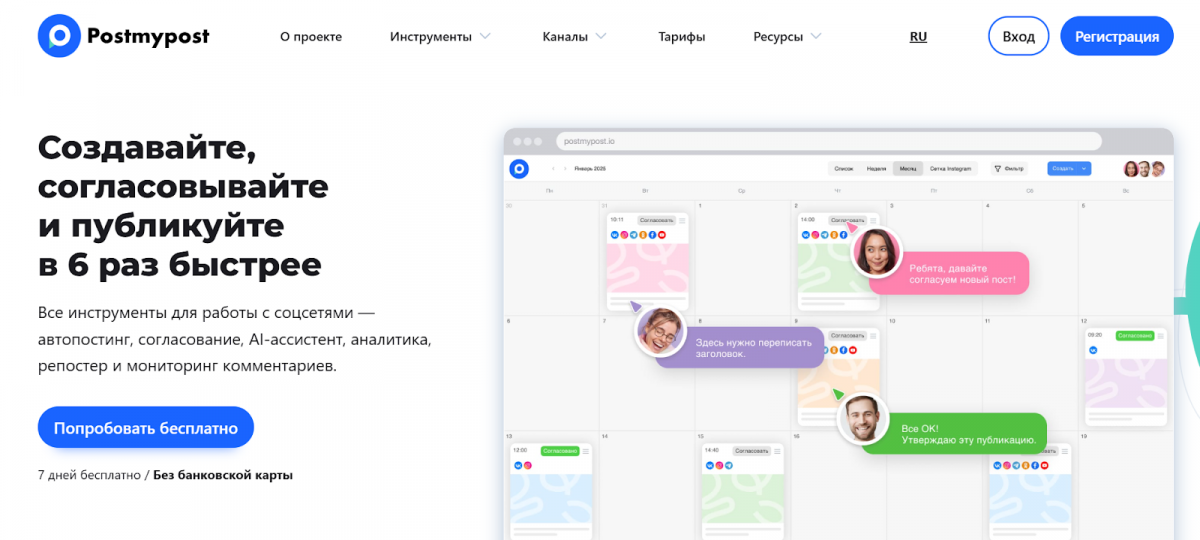
If you are tired of Google Sheets, where everything gets lost, or of manually posting across multiple accounts, use Postmypost. This Russian auto-posting and planning service is perfect for bloggers, SMM specialists, and small businesses. What’s especially great in 2026:
-
An integrated news hook calendar with date suggestions (you can immediately see what's relevant on a specific day/week);
-
Automatic post planning for a month ahead in 15–30 minutes;
-
Support for all popular platforms (VK, Telegram, Odnoklassniki, Rutube, and others);
-
Analytics, delayed posting, templates, and team collaboration;
-
A very user-friendly interface – even a beginner can figure it out in an evening.
Many are already using Postmypost precisely to avoid missing key dates and to publish thematic content on time. Give it a try – the first few days are free.
Conclusion: Make 2026 a Year of Systematic Content
Create a calendar for the year ahead by February, and from there, all you have to do is get creative and publish. To ensure you don't miss anything and don't spend hours on manual posting, connect Postmypost. The service takes care of the routine, while you focus on ideas and engaging with your audience.