Every day there are tons of content in the feed – people scroll through 90% of posts in seconds. To stop the scroll and encourage action (like, comment, repost, purchase), triggers are needed – psychological "hooks" that almost automatically trigger emotions and reactions.
The triggers we propose below are based on psychological principles and work excellently in SMM. After reading this article, you will be able to immediately add them to your posts and ads – the results will be noticeable after just 1-2 publications. This will reduce the time spent on experiments and help you gain more reach and requests without significant costs.
Trigger 1 – Scarcity. “Only a few left/today only”
People fear losing out on benefits more than they want to gain them. Scarcity prompts quick action.
-
Choose a limitation: by time (“until 23:59”), by quantity (“first 50 people”, “only 7 spots left”).
-
Add a phrase with a number to the post or story text.
-
Support it visually: a timer, a red caption “3 hours left”.
Example: “Only 24 hours – the 2026 reel guide is free! 342 people have downloaded it already, 158 copies left.”
Scarcity works powerfully only when it appears honest and believable. If the audience senses a trick, trust in the account declines for a long time, and reach and conversion suffer. Here are the most common mistakes that kill the effect of the trigger:
-
false scarcity (if the offer is endlessly extended, trust decreases);
-
too abstract (“will end soon” without numbers);
-
overestimating significance (if every post is “the last chance,” people stop believing).
Add such scarcity to 1-2 posts per week; it boosts conversion rates for clicks and requests.
Trigger 2 – Social Proof. “Already 1243 people have done it”
People trust the choices of the majority – “if everyone likes it, then it’s safe”.
-
Gather real numbers: likes, comments, reposts, reviews, screenshots.
-
Insert them at the beginning or middle of the post.
-
Format: “This method has already been used by 847 SMM specialists – average reach increase +47%”.
Example: “After this post, my client gained +3200 subscribers in a week. Here’s a screenshot of his stats →”
Social proof only works on trust. If the audience suspects a trick, the effect won’t just vanish – trust in the account may drop permanently. Here are the three most common mistakes that turn a powerful trigger into anti-advertising:
-
fake reviews (easy to verify);
-
outdated numbers (relevance is lost);
-
hiding the source (less trust).
The strongest social proof is UGC, which is content created by users themselves, not the brand. Reposts from real clients work best because they appear as honest recommendations from “someone like you,” not as paid advertising. The audience trusts them 4-8 times more than corporate posts or even beautiful reviews from the brand. Collect and publish reposts with client tags – it’s a free way to increase trust, reach, and conversion.
Trigger 3 – Authority. “Recommended by an expert with 10 years of experience”
People believe those who are “in the know” and have status.
-
State your credentials: cases, experience, achievement numbers.
-
Add a photo/video with the expert or mention well-known brands.
-
Phrase: “In my experience working with over 120 brands…”
Example: “I managed SMM for Wildberries and Ozon – here’s what really works in 2026.”
Authority only works when it is backed by facts and appears sincere. If the reader senses “salesy hype” or empty words – trust collapses instantly. Here are the most common mistakes even experienced SMM specialists make:
-
empty credentials without evidence (“expert with 10 years of experience” – and no case studies, no client names);
-
excessive boasting (“I am the best SMM specialist in Russia,” “everyone else is a zero”);
-
outdated or embellished achievements (“worked with top brands” – but actually a 2-month internship in 2018);
-
too many credentials in one post (listing 7-8 points in a row – looks like a resume, not help);
-
fake or unverifiable facts (“collaborated with X, Y, Z” – without tags, screenshots, or mentions from these brands);
-
authority without usefulness (“I have 50k followers” – but posts don’t solve the reader's problem, looks like bragging).
Even one strong fact of authority doubles trust.
Trigger 4 – Belonging/“For Insiders”. “Only for subscribers/our team”
People want to feel part of something bigger, “one of their own” among “their own.” This triggers the emotion of belonging to a group, increasing loyalty and the desire to participate.
-
Create a sense of “closed club”: “only for subscribers,” “for those who are already with us,” “our internal team.”
-
Add a phrase in the post/story that emphasizes exclusivity: “This is not for everyone – only for those who understand.”
-
Provide access to something valuable: a closed chat, a secret guide, early access, a personal bonus.
Example: “Only for those who are already in our mailing list – here’s a closed guide to the 2026 reels that isn’t available publicly.”
Belonging only works when it seems sincere and valuable. If the audience feels falseness or emptiness, instead of loyalty, you’ll receive skepticism and churn. Here are the most common mistakes that kill this trigger:
-
doing “for insiders” too often – the sense of exclusivity is lost;
-
not providing real value inside the “club” (empty promises – people leave);
-
excluding too harshly (e.g., “only for those with 10k+” – scares away newcomers);
-
no mechanism for entry (you write “for insiders,” but don’t explain how to become “one of them”);
-
overdoing “secrecy” without confirmation (people sense it’s just a marketing ploy).
The belonging trigger builds long-term loyalty better than one-time promotions. When a person feels “I’m in the know, I’m one of them” – they comment, repost, and buy more often. Add it to 1-2 posts per week so the audience grows not only in number but also in engagement.
Trigger 5 – Mutual Benefit. “Get a gift for reposting”
People love free things and feel obliged to reciprocate.
-
Offer a valuable bonus: checklist, template, guide.
-
Condition: like + repost + comment.
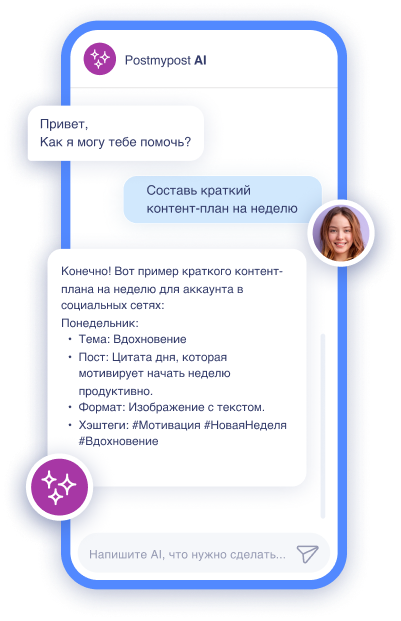 AI-ассистент отвечает в комментариях и сообщениях так, будто это живой менеджерБыстро, естественно, без пропусковУзнать подробнее
 -
Send the bonus in a direct message.
Example: “Repost + write ‘Guide’ – I’ll send you 15 ideas for reels that get 100k+ views.”
Mutual benefit is one of the cheapest and fastest ways to gain reach and engagement. But if the gift is useless or the conditions are frightening, instead of growth, you’ll get irritation and churn. Here are the most common mistakes that turn “freebies” into an anti-trigger:
-
useless or low-value gift (a checklist with 3 obvious points, a template that’s everywhere, a 2-page PDF without real utility – people feel they are being “played”);
-
complex or multi-step conditions (like + repost + tag 5 friends + subscribe + write in DMs + send a screenshot – the barrier is too high, no one will complete it);
-
not delivering on promised time (or not delivering at all) – a person reposted, but the gift didn’t arrive within an hour/day;
-
the gift doesn’t match the audience (giving a reel guide to newcomers when the audience is experienced SMM specialists or vice versa);
-
no clear deadline or limit (the “forever” promo – people procrastinate, motivation drops, or a limit of 1000 people is given, but in the end, 5000 are handed out – looks like a trick);
-
overdoing frequency (every other post “repost and get” – the audience gets tired, stops reacting, perceives it as spam);
-
not showing the value of the gift in advance (saying “get the guide,” but not explaining what’s inside, how much time/money it will save – people don’t believe in the benefit and scroll past).
Freebies are one of the cheapest ways to gain reach.
Trigger 6 – Affinity. “We are just like you”
People buy from those they like.
-
Show human humor, personal stories, failures.
-
Engage with the audience – questions, emojis.
-
Add photos/videos from life.
Example: “I also once managed an account with 300 followers and thought that SMM was hard…”
Affinity is built on sincerity and closeness, but if you overplay it a bit, instead of trust, you’ll get rejection or mockery in comments. People instantly sense falseness. Here are the most common mistakes that kill this trigger:
-
too “salesy” a tone (even in personal stories inserting “so buy now” – it’s immediately felt as hidden sales, affinity evaporates);
-
fake or stretched stories (“I was also at zero, and then in a month it was 100k” – sounds like a typical info-hustler template, people don’t believe);
-
overdoing “pity” or victimhood (too much “I suffered,” “it was hard for me” – causes irritation or a feeling of manipulation rather than empathy);
-
lack of specifics and details (writing “I also started small” – but without names, dates, screenshots, emotions, it looks empty and insincere);
-
using personal stories too often (every post “from my life” – the audience gets tired, stops perceiving it as sincerity, starts scrolling);
-
not considering the values and pains of the audience (talking about your “luxury” problems when the target audience is beginners with a budget of 0 creates rejection “you don’t understand us”);
-
no feedback after the story (shared personal experience but don’t respond to comments “I had the same thing” – miss the chance to strengthen the connection, looks like a monologue).
Affinity builds long-term trust.
Trigger 7 – Curiosity/Intrigue. “What happens next / secret inside”
The human brain hates incompleteness (the Zeigarnik effect). Intrigue makes people keep watching, reading, clicking – this is one of the strongest triggers for holding attention on social media in 2026.
-
Start the post/story/reel with a question, something left unsaid, or a teaser: “I lost 50k ₽ on this... but then...”.
-
Give part of the value right away, but keep the main point “off-screen”: “Here are 3 mistakes I made... and the fourth was fatal”.
-
End with a call to action: “Swipe/watch/write ‘I want to know’ in the comments – I’ll send the continuation in DMs”.
A carousel post will handle this excellently.
-
Slide 1: “A client came to me with 300 followers and 0 applications...”.
-
Slide 2: “After 2 weeks – +4k and 12 sales...”.
-
Slide 3: “But there was one secret step that no one uses...”.
-
Last slide: “Want to know what it was? Write ‘SECRET’ in the comments – I’ll send it to you for free.”
Intrigue works like a magnet for algorithms: posts with high viewing time and readability get more reach and impressions. But if the intrigue turns out to be empty or misleading, the audience quickly learns not to trust, scrolls past immediately, and even marks it as “not interesting.” As a result, not only engagement drops but the entire traffic of the account. To ensure curiosity yields real results instead of harm, eliminate these typical mistakes:
-
revealing everything at once (intrigue dies, people don’t finish watching);
-
intrigue without value (like “shock! you won’t believe,” but nothing useful inside, causes irritation and unsubscribes);
-
too weak a teaser (questions like “interesting?” are scrolled past because they didn’t grab attention);
-
overdoing clickbait (promising “a million in a week,” but delivering clichés – trust decreases);
-
not fulfilling promises (said “I’ll send in DMs,” but don’t respond – negativity and loss of audience);
-
no deadline or limit (intrigue “forever” – people procrastinate and forget).
Curiosity is king of retention in 2026: posts with intrigue get +30-80% viewing time and more comments. Use it in story series, carousels, and reels – it boosts reach and engagement for free because algorithms promote content that people watch to the end.
Trigger 8 – Result/Before-After. “Was 500 – now 15,000”
Specific numbers sell better than words.
-
Show real metrics.
-
Use graphs or screenshots.
-
Add “how exactly”.
Example: “Post with this trigger: reach 2k → 18k in one day.”
The “before/after” result is one of the most convincing triggers in SMM because numbers and visual changes work at the level of proof, not promises. People believe their eyes and specific metrics 3-5 times stronger than beautiful words. But here it’s easy to slip into falsehood or weak presentation, and then instead of trust, you get skepticism, comments like “fake,” or just scrolling past. Here are the most common and destructive mistakes that kill the effect of this trigger:
-
fake or embellished numbers (writing “was 300 → now 50,000,” but the actual growth was over a year and with ads – the audience quickly checks and loses trust);
-
no evidence (screenshots are old, blurry, without date/account, or just text without visuals – looks suspicious);
-
comparing “apples to oranges” (showing growth after paid advertising, but passing it off as organic; or comparing different periods/seasons without explanation);
-
too big jumps without explaining “how exactly” (was 1k → 100k in a week – but not mentioning that you launched targeting with a 300k budget – people think “deception”);
-
outdated cases (showing results from 2023-2024 in 2026 – the audience feels it’s not relevant, algorithms have changed);
-
overdoing numbers in every post (every second post “before/after” – the value is lost, people stop believing, perceive it as boasting);
-
no context and realism (showing ideal growth without mentioning difficulties, budget, time – looks not like a real case, but like a fairy tale, causes rejection);
-
poor visualization (graphs are crooked, colors unreadable, text small, screenshots cropped – the reader doesn’t understand what exactly has grown and scrolls past).
Numbers are the best argument.
Trigger 9 – Nostalgia. “Remember how we started?”
Nostalgia evokes strong positive emotions, a sense of belonging to the past, and a desire to return to “the good times.” This increases viewing time, comments (“oh yes, exactly!”) and trust because a person feels a connection with the brand/expert through shared memories.
-
Choose a recognizable moment from the audience's recent past: a trend, meme, event, tool, or pain that was prevalent 1-3 years ago.
-
Tie it to the current topic: “Remember how everyone made Reels to this music? Now the algorithm requires something completely different…”.
-
Add an emotional hook + benefit: “Back then it worked, and now I found a way to regain that same growth without old hacks”.
A carousel post will handle this task well.
-
Slide 1: “Remember 2023-2024, when it was enough just to shoot a reel with text on the screen and music from trends?”
-
Slide 2: “Reaches flew to 50-200k, comments wrote themselves…”.
-
Slide 3: “Then the algorithm changed everything. But I returned that same vibe with one trick…”.
-
Last slide: “Want to get back the feeling of ‘it’s all working out’? Write ‘NOSTALGIA’ – I’ll send you an updated reel template for 2026 that gives a similar effect.”
However, there are a few mistakes that kill the effect of nostalgia.
-
Nostalgia for too distant a past (recalling 2018-2020 – younger audiences won’t understand, older audiences are no longer in the loop).
-
Fake or exaggerated nostalgia (“everything was better back then” without specifics – sounds like whining, not value).
-
No connection to the present (only telling “how cool it was” but not giving a solution for “how to get it back” – people feel sadness without utility).
-
Overdoing it (every post “remember how it used to be?” – the audience gets tired, perceives it as laziness to develop).
-
Ignoring negative memories (recalling a trend that caused disappointment for many – instead of warmth, you receive negative comments).
-
No emotional anchor (just facts without “I miss it too,” “it was magical” – nostalgia doesn’t ignite, the post gets scrolled past).
-
Weak call to action (recalled the past but didn’t give any current action – you miss out on conversion).
Nostalgia is a powerful emotional trigger for 2026 when people seek warmth and familiarity in the chaos of algorithms. Add it 1-2 times a month.
Trigger 10 – Simplicity. “Do it in 5 minutes”
People are lazy – the simpler, the better.
-
Promise minimal effort.
-
Provide 3-5 steps.
-
Add a template.
Example: “Copy this post text and paste it into your account – engagement +40% in 2 minutes.”
Simplicity is not about “simplifying” content, but about respecting the time and energy of the audience. People really are lazy: if a task seems complex, they won’t even start. When there’s “ready in 5 minutes,” conversion to action can increase by 3-5 times. But if you complicate it too much, provide a useless “template,” or deceive about the time – the reader feels irritation, loses trust, and no longer clicks your calls to action. Here are the most common mistakes that kill the effect of simplicity and turn a strong trigger into anti-motivation:
-
promising “in 5 minutes,” but the actual instruction has 20 steps and takes 40 minutes (the reader feels deceived and gets angry);
-
the template/text/checklist is useless or obvious (“post regularly” – people scroll past because they didn’t gain anything new);
-
too many steps (even if each is simple, 8-12 steps look intimidating, the barrier to entry remains high);
-
no real example (writing “do it this way,” but not providing ready text/table/screenshot – the reader has to come up with it themselves, motivation drops);
-
overdoing “simplicity” in every post (every other post “in 3 minutes” – the audience stops believing, perceives it as clickbait);
-
ignoring the audience's level (giving “in 5 minutes” to beginners, but the instruction requires knowledge of Canva, targeting, etc. – beginners get scared);
-
not specifying exact time or effort (writing “fast and easy,” but not saying “5 minutes + 2 clicks” – uncertainty scares people away).
Simplicity lowers the barrier to entry.
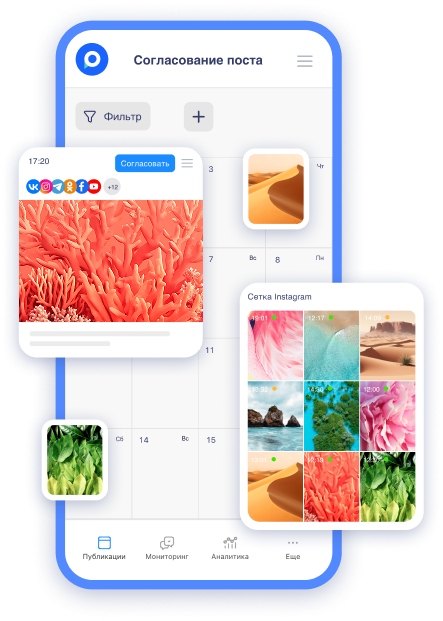
Crafting posts with triggers is convenient in your head, but when there are multiple accounts and dozens of ideas – it’s easy to get confused about deadlines, due dates, and drafts. In Postmypost, there’s a content calendar:
-
you can add posts in advance;
-
set reminders for deadlines;
-
see where each trigger was used;
-
publish in one click across all networks.
This saves 2-3 hours a week. Now you know how to stop the scroll and encourage the audience to act. Apply 3-4 triggers in every post – reach and engagement will increase within a week.
Try adding one trigger in your next post – and if you want to automate planning and not miss deadlines, test Postmypost for 7 days for free.