
In 2026, SMM is no longer about “posting once a day and waiting for likes.” Teams are managing dozens of accounts, hundreds of comments daily, and facing demands for “faster, better, with client reports.” Old habits—Excel spreadsheets for content plans, switching between 5 services, and manual approvals via Telegram—consume up to 70% of working hours. It's time to update the toolkit. In this article, we will explore which features truly speed up team work and which only create an illusion of progress, with examples, checklists, and recommendations that can be implemented today.
Why the old toolkit slows down in 2026
Social media algorithms have become even more demanding: they favor regularity, personalization, and quick responses to comments. At the same time, the volume of content has increased—Reels, Stories, long posts, cross-posting to messengers. A team of 3-5 people spends time on:
-
Finding ideas and writing texts from scratch.
-
Approving edits in chats.
-
Manual posting and checking scheduled publications.
-
Collecting analytics for each platform separately.
The result? Burnout, missed deadlines, and content that “looks mediocre.” Modern tools solve 80-90% of these tasks through automation and AI. The key is to choose those that genuinely integrate into the team’s workflow, instead of adding another tab in the browser.
Main trends in SMM tools for 2026
1. AI as a primary assistant, not just a “gimmick”
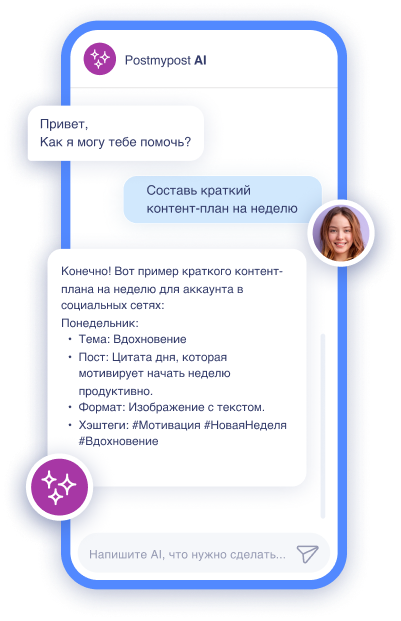
AI is no longer just generating “beautiful text.” It creates content plans, adapts a single post for 5 audiences, suggests visuals based on references, and even drafts responses to comments. According to research, teams actively using AI publish 40% more content without compromising quality.
2. A unified hub instead of a “zoo” of services
Auto-posting + cross-posting + monitoring comments in one window. This is especially relevant with the rise of messengers (MAX, Telegram, VK). One piece of content → automatic adaptation for the platform → scheduled publication.
3. Team collaboration with built-in approval
Roles, stages, previews, and comments within the service. The client or manager approves the post with one click—without lengthy discussions and the risk of “where did I send this?”
4. Analytics that shows money, not just reach
In 2026, “pretty numbers” of reach and likes no longer convince clients or management. Businesses need real revenue: how many website clicks a post generated, how many inquiries came through Direct/Telegram, which content truly impacted sales and ROI. Modern analytics in advanced SMM tools address this issue through:
-
Deep statistics for each post—reach, views, engagement (ER), likes, comments, saves, shares + dynamics over time.
 AI-ассистент отвечает в комментариях и сообщениях так, будто это живой менеджерБыстро, естественно, без пропусковУзнать подробнее
 -
UTM tags with automatic insertion—the service automatically adds unique tags to links so you can see in Google Analytics or cross-analytics which post drove traffic and conversions.
-
Conversion and sales analysis—tracking clicks in messengers, chats, on websites, and subsequent actions (inquiries, purchases). Some platforms show how many leads each content format (Reels, carousel, long post) generated.
-
Analytics by categories and accounts—average metrics by topics, comparison of effectiveness across different social networks and periods.
-
Automatic reports for clients—beautiful dashboards with key metrics, graphs, and conclusions that can be exported to Excel/CSV or sent with one click. No more late-night data collection from different dashboards.
At Postmypost, all analytics is gathered in one convenient dashboard with UTM support, report export, and category analysis—many teams note that this significantly simplifies client work.
5. Automation of routine tasks
Even with strong AI and analytics, there remains a lot of small, time-consuming work: hashtag placement, categorizing posts, regular reposting of news from the website, reminders for publications. In 2026, the best tools take over this routine almost entirely. Key automation features include:
-
Auto-hashtags—you set lists of hashtags for different categories, accounts, or styles (promotional, engaging, branding). The service automatically inserts them in the right order and quantity when publishing.
-
Categories and tags—automatic assignment of categories when creating a post or importing from RSS. This helps to quickly filter content in the calendar and analyze topic effectiveness in analytics.
-
RSS Reposter—you set up a news feed from the website/blog once, and all new materials are automatically turned into social media posts (with text adaptation, hashtag and category addition). Ideal for news projects, blogs, and e-commerce.
-
Reminders and notifications—automatic alerts about upcoming publications, the need for approvals, new comments, or even payment reminders. Plus, auto-publishing rules based on the best times.
-
Additional features—automatic text formatting for each platform, link shortening, saving drafts, and much more.
Automating routine tasks frees up 2-4 hours a day for each specialist. These hours can be devoted to creativity, strategy, and audience engagement—things that cannot be fully handed over to AI.
To learn more about which AI tools are truly effective in 2026 and which just waste time, read here “AI tools for SMM in 2026: what really works and what wastes time”.
Want to dive deeper into strategy? Check out the guide “SMM strategy in 2026: development and promotion stages”.
Recommendations: how to implement an update without chaos
-
Start with an audit. Calculate how much time the team spends on routine tasks now. Use free trials.
-
Test on one account. Transfer 10-15 posts and see how much faster the process becomes.
-
Train the team. The best tool is useless if it is not used.
-
Don’t chase quantity. It’s better to have one powerful service than 7 “niche” tools.
If you are looking for a solution that already covers 90% of an SMM team’s tasks (from idea to publication and reporting), check out Postmypost. The service combines AI, auto-posting, team approval, and analytics in a user-friendly interface. Many of our readers note that after switching to it, the team finally started keeping up not only with “posting” but also thinking about strategy.
Conclusion: it’s time to speed up
The year 2026 is when SMM stops being “manual labor” and becomes a process where humans are responsible for creativity and strategy, while a smart tool takes care of the routine. Update your toolkit now—and by the end of the year, your team will be publishing 2-3 times more quality content with the same resources.
Want to check how much Postmypost will speed up your work? Try it free for 7 days—no card and no obligations.